The Science of Golden Hour: Rayleigh Scattering & Sky Spectrum Shifts
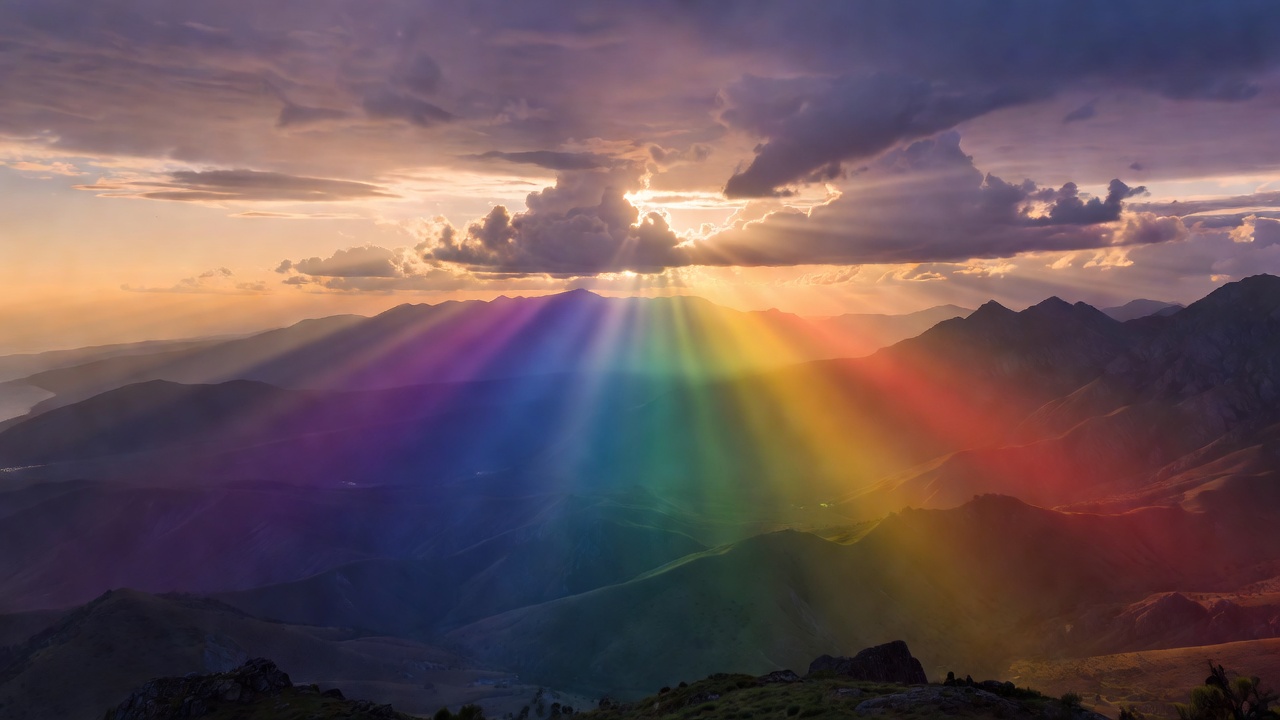
Why does the midday sky appear crisp blue while the setting sun paints the atmosphere in intense burnt orange, coral, and deep purple? The answer lies in the scattering physics of electromagnetic radiation as light traverses Earth's atmosphere.
Rayleigh Scattering Demystified
Rayleigh scattering occurs when light collides with particles in the atmosphere that are smaller than the light's wavelength—predominantly nitrogen and oxygen molecules. The intensity of scattered light is inversely proportional to the fourth power of its wavelength (1/λ⁴).
During midday, when the sun is directly overhead, sunlight travels through a relatively thin layer of atmosphere (1 Air Mass). Shorter blue and violet wavelengths (around 400-450 nm) scatter easily in all directions, illuminating the sky in blue. However, at sunset, the sun's rays enter at an oblique angle, traveling through up to 10 times more atmospheric volume before reaching an observer's eyes.
Why Red, Coral & Gold Prevail at Dusk
By the time light completes its extended path through the lower troposphere, almost all blue and green wavelengths have scattered away out of the direct line of sight. What remains are the longer, less easily scattered wavelengths: yellow (580 nm), orange (600 nm), and red (700 nm).
Mie Scattering & Volcanic Dust Effects
When larger particles are present—such as sea salt spray, water droplets, or volcanic particulates—Mie scattering dominates. Mie scattering is not wavelength-dependent, meaning it scatters all light spectrums almost equally, creating the soft glow surrounding low-elevation cloud bases during twilight.